Tourism
Definition
Tourism refers to the commercial organization and operation of vacations and visits to places of interest, or the practice of traveling for recreation or leisure.
Parts of Speech
- Noun
Pronunciation
American English
- IPA Pronunciation: /ˈtʊr.ɪ.zəm/
- Respelling: TOOR-ih-zuhm
British English
- IPA Pronunciation: /ˈtʊə.rɪ.zəm/
- Respelling: TOO-uh-rih-zuhm
Etymology
The word "tourism" originates from the French word "tourisme," derived from "tour," meaning "a journey or circuit," which comes from Old French "tour" (turn). It entered the English language in the early 19th century to describe travel for pleasure or recreation.
Derivatives
- Tourist (noun)
- Touristic (adjective)
- Eco-tourism (noun)
- Overtourism (noun)
- Tourism-related (adjective)
Synonyms
- Travel
- Voyaging
- Excursion
Antonyms
- None
Usage
The noun "tourism" is used to describe activities related to traveling for pleasure, as in "The city depends on tourism for its economy." It also refers to the industry associated with recreational travel, as in "Sustainable tourism is growing in popularity."
Related Terms
- Traveler: A person who journeys from place to place.
- Hospitality: Services provided to travelers and tourists.
- Leisure: Free time used for relaxation or recreation.
Detailed Definitions
Noun
- The practice of traveling for pleasure: Refers to recreational journeys to various locations.
- Example: "Tourism is a major source of income for tropical islands."
- The business of attracting, accommodating, and entertaining tourists: Refers to the industry that supports leisure travel.
- Example: "The government invests heavily in tourism infrastructure."
- Travel to historical or cultural landmarks: Focuses on journeys made to places of significant interest.
- Example: "Cultural tourism promotes the preservation of heritage sites."
tourism
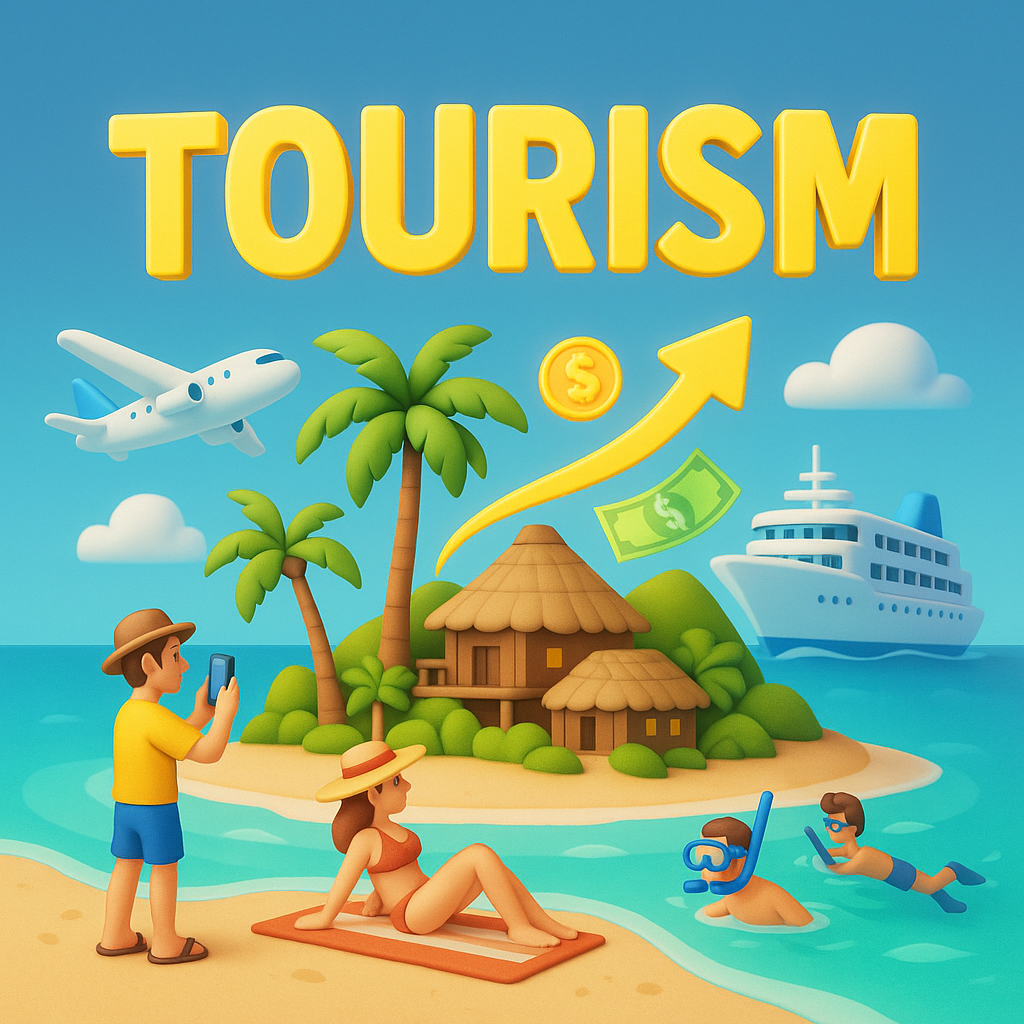
Tourism is a major source of income for tropical islands.
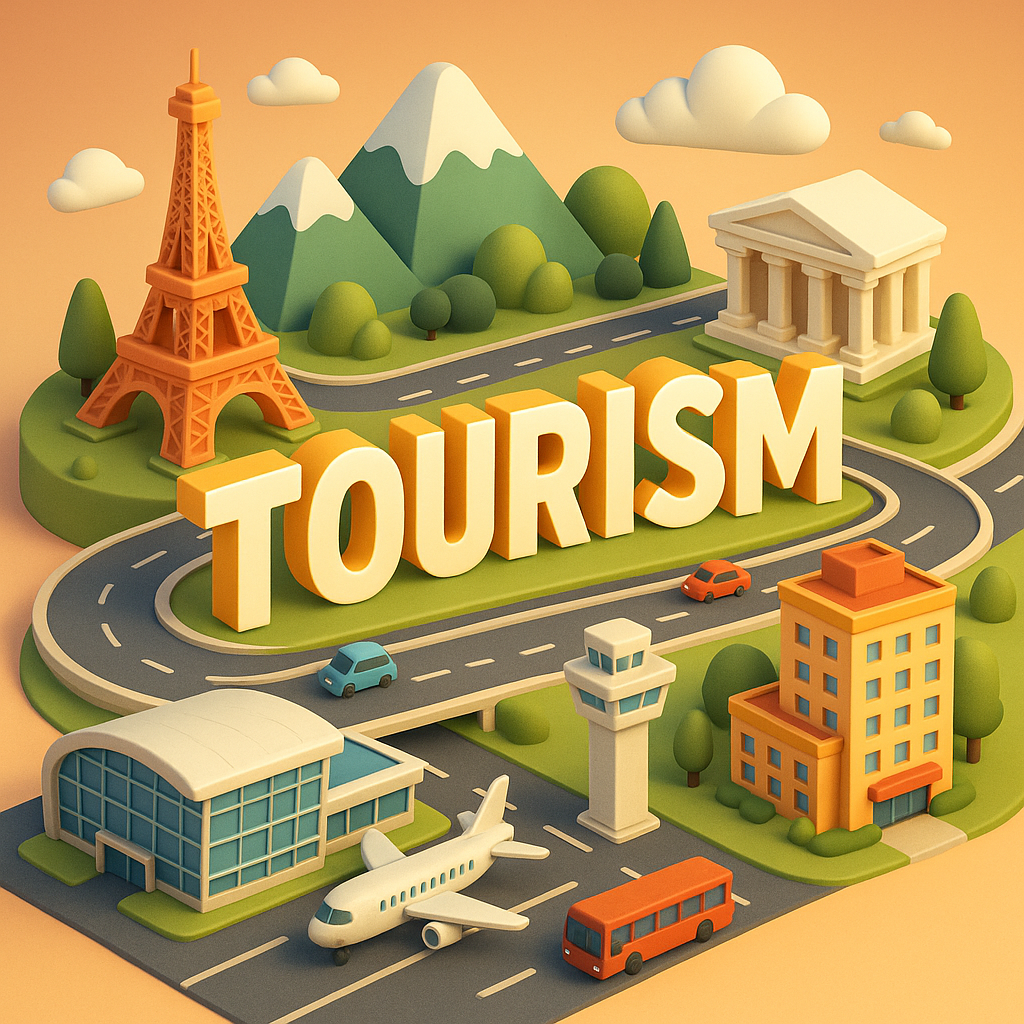
The government invests heavily in tourism infrastructure.
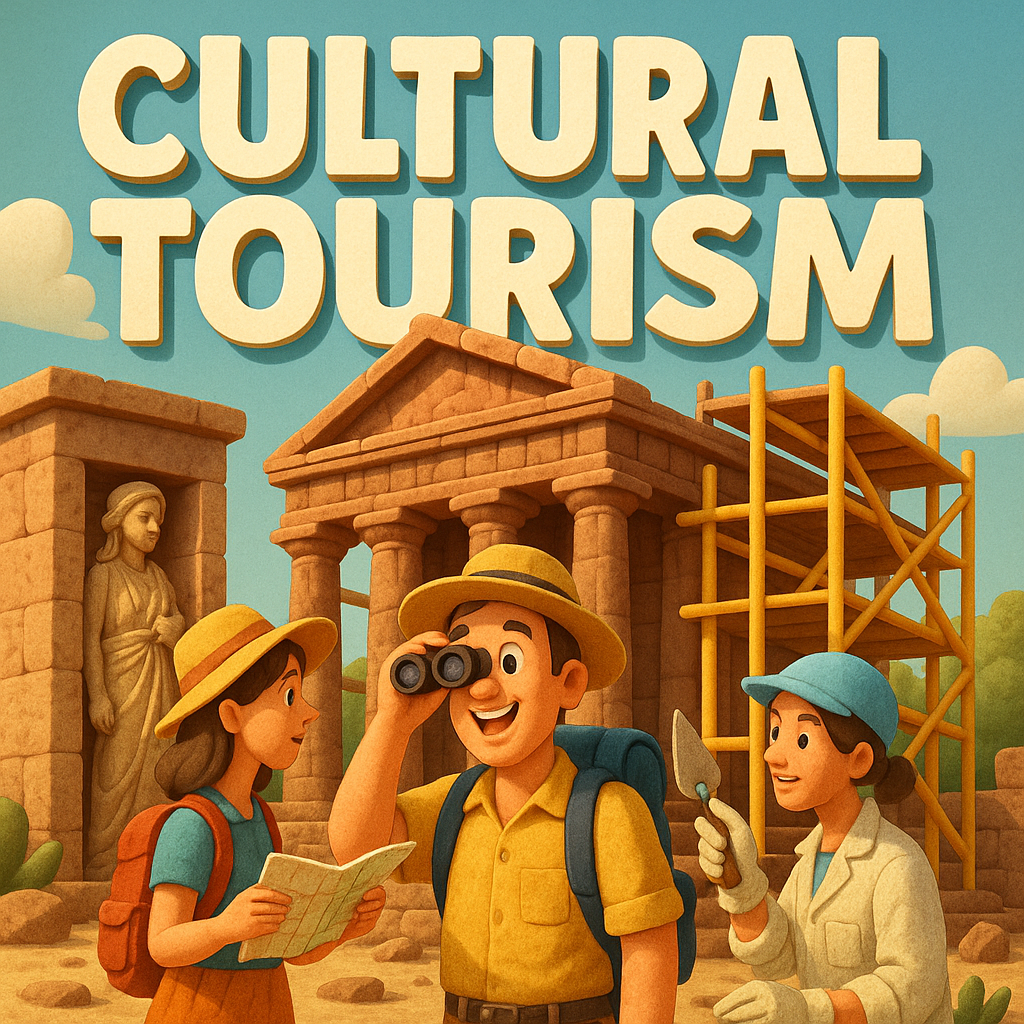
Cultural tourism promotes the preservation of heritage sites.
🇨🇳 Mandarin
- 旅游业 (lǚyóuyè): tourism industry
- IPA Pronunciation: /ly˧˥.joʊ˧˥.jɛ˧˥/
- Respelling in English: lyoo-you-ye
🇮🇳 Hindi
- पर्यटन (paryatan): tourism
- IPA Pronunciation: /pərjət̪ən/
- Respelling in English: par-yuh-tun
🇪🇸 Spanish
- Turismo (turismo): tourism
- IPA Pronunciation: /tu.'ɾis.mo/
- Respelling in English: too-rees-moh
🇫🇷 French
- Tourisme (tourisme): tourism
- IPA Pronunciation: /tuʁ.ism/
- Respelling in English: too-reesm
🇦🇪 Modern Standard Arabic
- سياحة (siyāḥa): tourism
- IPA Pronunciation: /siːˈjaːħa/
- Respelling in English: see-yaa-hah
🇧🇩 Bengali
- পর্যটন (paryatan): tourism
- IPA Pronunciation: /pɔrjɔtɔn/
- Respelling in English: por-yo-ton
🇷🇺 Russian
- Туризм (turizm): tourism
- IPA Pronunciation: /tʊˈrʲizm/
- Respelling in English: too-reesm
🇵🇹 Portuguese
- Turismo (turismo): tourism
- IPA Pronunciation: /tu.ˈɾiʒ.mu/
- Respelling in English: too-reesh-moo
🇮🇩 Indonesian
- Pariwisata (pariwisata): tourism
- IPA Pronunciation: /pari.wisata/
- Respelling in English: par-ee-wee-sata
🇩🇪 German
- Tourismus (tourismus): tourism
- IPA Pronunciation: /toʊ̯ˈʁɪsmʊs/
- Respelling in English: tow-rees-moos
🇯🇵 Japanese
- 観光 (kankō): sightseeing, tourism
- IPA Pronunciation: /kaŋ.koː/
- Respelling in English: kahn-koh
🇻🇳 Vietnamese
- Du lịch (du lịch): tourism
- IPA Pronunciation: /zʊ lɪk˧˥/
- Respelling in English: zu lik
🇰🇷 Korean
- 관광 (gwangwang): sightseeing, tourism
- IPA Pronunciation: /gwan.gwang/
- Respelling in English: gwan-gwang
🇹🇷 Turkish
- Turizm (turizm): tourism
- IPA Pronunciation: /ty.ɾizm/
- Respelling in English: tyuh-reesm
🇵🇰 Urdu
- سیاحت (siyahat): tourism
- IPA Pronunciation: /siːaːħat̪/
- Respelling in English: see-ya-hut